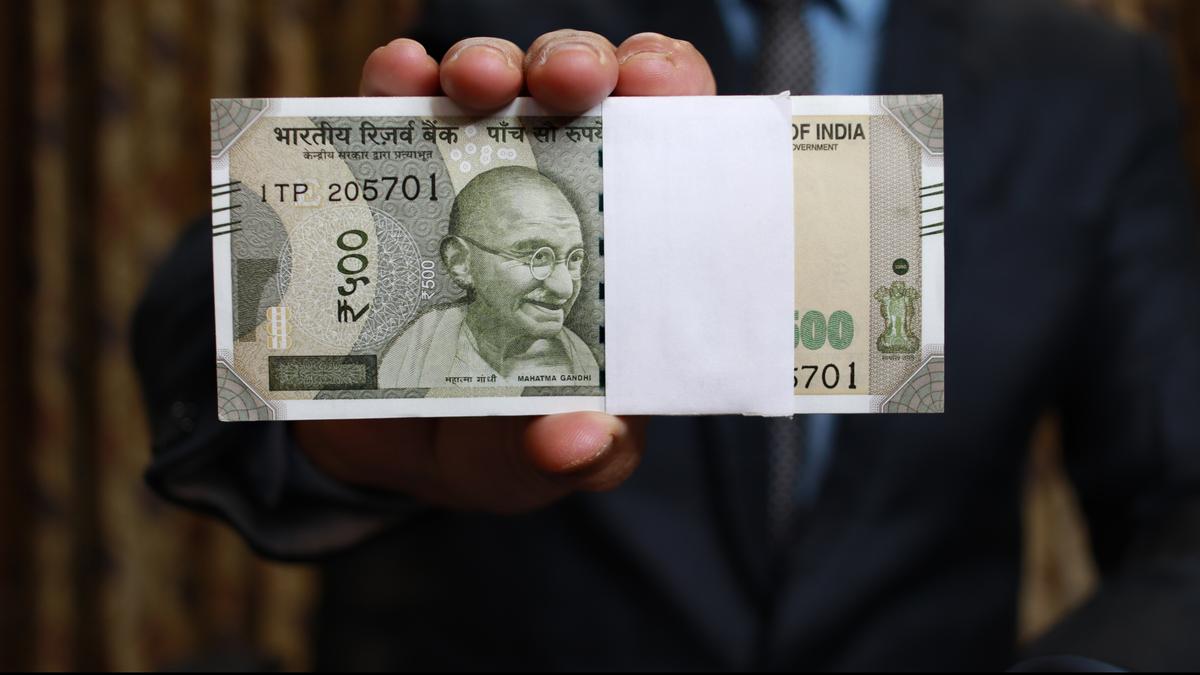
The rupee’s modest gains were capped this week as a mix of global and domestic factors kept traders cautious. U.S. President Donald Trump’s comments about possible tariffs on India, continued foreign institutional investor (FII) outflows, and sustained weak sentiment in domestic equity markets all contributed to limiting sharper appreciation in the currency, forex traders said.
Why remarks on tariffs matter for the rupee
Talk of tariffs between the world’s two largest democracies raises trade and policy uncertainty. Even without immediate changes to tariffs, such remarks can prompt investors to reassess risk and capital allocation. For the rupee, this translates into increased volatility: prospective trade barriers may weigh on exports and investor confidence, and that in turn can reduce foreign demand for local currency assets.
FII outflows: a direct drag on demand
Foreign institutional investors play a big role in India’s capital markets. When FIIs move money out, the immediate effect is fewer foreign buyers of equities and bonds, which reduces the demand for rupees. Forex traders point out that persistent outflows act as a steady headwind against any sustained appreciation in the currency.
Domestic equity weakness keeps sentiment fragile
Local market weakness compounds the problem. Slumping or tepid equity markets can deter overseas investors from reversing outflows, while also reducing domestic risk appetite. That sentiment spillover reinforces limits on the rupee’s upside, as investors prefer to hold liquidity or shift to perceived safer assets.
How traders are positioning
- Cautious optimism: Traders may buy the rupee on dips but are reluctant to push for large positions until headlines around trade policy settle.
- Volatility management: Many market participants are tightening risk limits and using hedges to protect against sudden swings tied to geopolitical or capital flow developments.
- Watching flow data: Daily FII activity and trade figures are closely monitored, since they provide the clearest signal of near‑term pressure on the currency.
Broader economic implications
A persistently capped rupee has several ripple effects. For importers, a weaker or constrained rupee can raise costs, adding to inflationary pressure. For exporters, currency stability or modest depreciation can help competitiveness, but uncertainty around tariffs could negate those benefits. For policymakers, central bank responses will balance inflation concerns and growth objectives, while trying to maintain orderly market conditions.
What investors and businesses should watch next
- Further statements or policy steps from Washington regarding tariffs and trade ties with India.
- Daily FII flow trends and changes in portfolio allocation by global managers.
- Domestic equity market performance and corporate earnings that could shift sentiment.
- Central bank commentary and any intervention that may affect liquidity and exchange rates.
- Global risk sentiment driven by macroeconomic data or geopolitical news.
In short, while the rupee showed some resilience, it remains sensitive to outside signals and capital flow dynamics. Until the trade outlook clarifies and FII flows stabilize, forex traders expect gains to be measured rather than sharp.