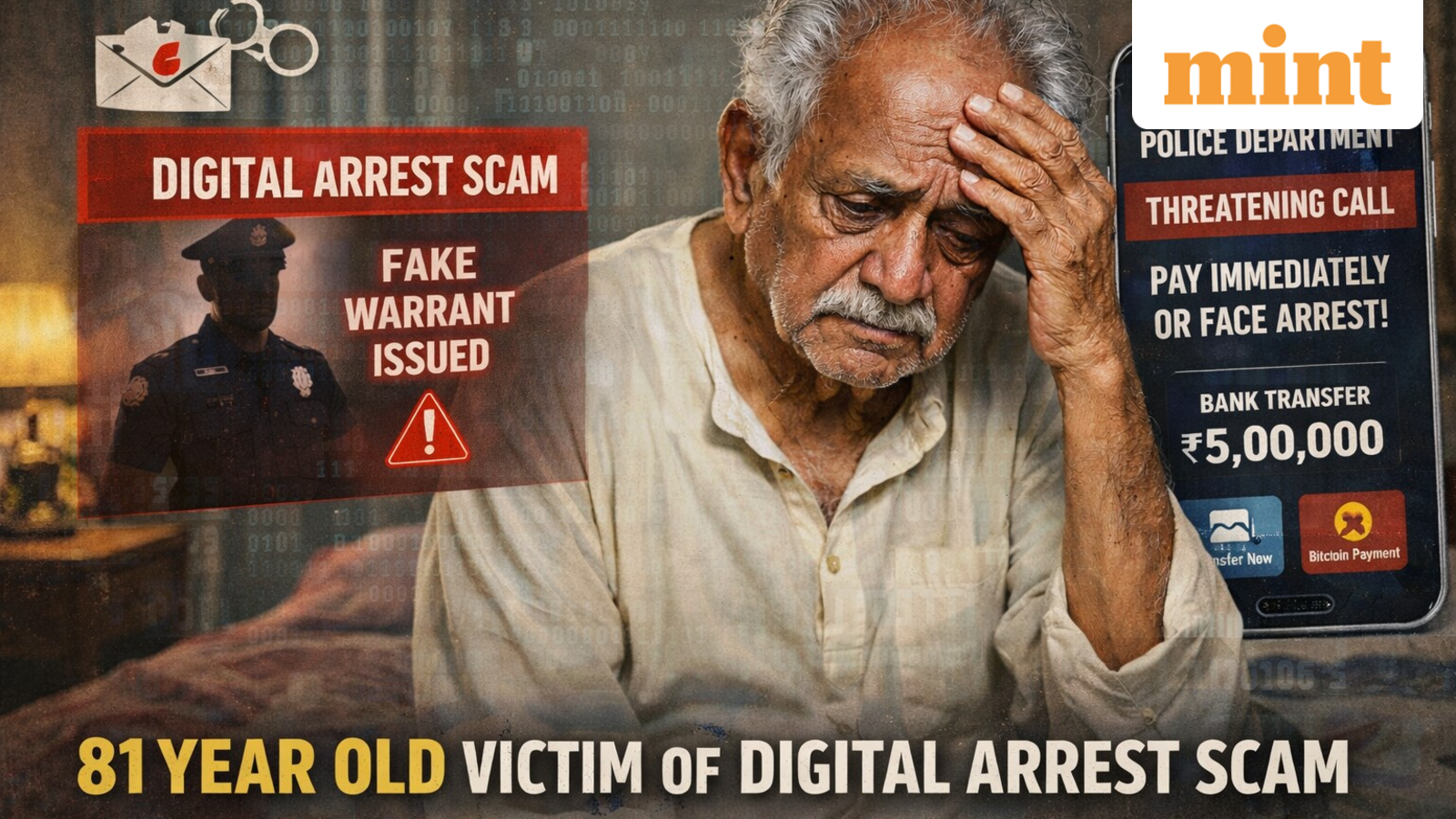
How a Delhi octogenarian couple were tricked into giving up life savings
An elderly couple in Delhi recently lost their life savings after being targeted by fraudsters who pretended to be officers from the Central Bureau of Investigation (CBI). The scammers convinced the couple that their money was needed for an investigation and pressured them into paying. In desperation, the couple even took a gold loan to meet the fraudsters’ demands.
How the scam typically works
Impersonation of law enforcement is a common tactic. Fraudsters call or message victims, claiming to be from a government agency and insisting there is an urgent legal or financial matter that requires immediate payment. They often:
- Create urgency: Tell victims they must act quickly to avoid arrest or legal trouble.
- Use official-sounding language: Refer to investigations, case numbers, or bank account freezes to seem credible.
- Demand secrecy: Instruct victims not to tell family or friends or to avoid contacting the bank directly.
- Ask for cash, transfers or valuables: Request money be handed over, deposited into specific accounts, or collected by a courier.
Against this backdrop, older adults—who may be more trusting or more easily stressed by threats of legal trouble—become prime targets. In the Delhi couple’s case, the scammers pushed them so far that they borrowed against household gold to produce the cash demanded.
Why elderly people are particularly vulnerable
- Trust in authority: Many seniors are conditioned to respect and believe official voices and may not expect someone to impersonate them.
- Fear and confusion: High-pressure calls that threaten arrest or legal consequences can cause panic and hurried decisions.
- Lack of technical or financial literacy: Older adults may be less familiar with modern fraud patterns like voice phishing (“vishing”) or fake courier pick-ups.
- Isolation: Limited social contact can reduce opportunities to verify or ask a trusted person for advice.
Immediate steps to take if you or a loved one is targeted
If you receive a suspicious call or message claiming to be from a law enforcement agency, consider the following actions:
- Do not share personal information: Do not reveal bank details, account numbers, OTPs, or Aadhaar data over the phone.
- Disconnect and verify: End the call and contact the agency directly using the phone number on its official website or through a known, trusted number.
- Contact family or a trusted adviser: Before transferring money or handing over valuables, speak with a family member, neighbour, or financial adviser.
- Inform your bank immediately: If money has been transferred, notify the bank to request a freeze or reversal of transactions where possible.
- File a complaint: Report the incident to local police and your regional cybercrime unit without delay.
What to do after a financial loss
When funds are gone or debts have been taken on in response to a scam, swift action can limit further damage:
- File an FIR: Lodge a First Information Report with the nearest police station. Keep copies of all documents, call logs, messages, and transaction receipts.
- Contact the lending institution: If you took a loan (for example, a gold loan), inform the lender about the circumstances—some institutions offer assistance or restructuring options in fraud cases.
- Reach out to financial ombudsmen: Pursue grievance redressal channels available at banks and financial regulators.
- Seek legal aid: If necessary, consult a lawyer or a legal aid clinic to understand options for recovery and for protecting remaining assets.
- Preserve evidence: Save all communications and transaction records to support investigations and possible recovery efforts.
Prevention: steps families and organizations can take
Taking preventive measures reduces the risk that elderly relatives will be victimized:
- Educate regularly: Talk to older family members about common scams and encourage skepticism of unexpected calls asking for money.
- Set financial limits: Use joint accounts or require a second signatory for large withdrawals or transfers where practical.
- Create a verification plan: Agree on a simple process to verify unusual requests—such as calling a designated family member or using a known emergency code.
- Use bank safeguards: Enable transaction alerts, block third-party mandates where possible, and set withdrawal limits.
- Community outreach: Local groups and financial institutions should run awareness drives focused on protecting senior citizens.
Final note
Scams that prey on trust and fear have real human costs—financial loss, debt, and emotional distress. Families, banks and community groups all have a role in preventing such tragedies. If you or someone you know is approached by someone claiming to be from a government agency and requesting money, take a moment to stop, verify and seek help. Quick verification and reporting can prevent further loss and help authorities catch the perpetrators.