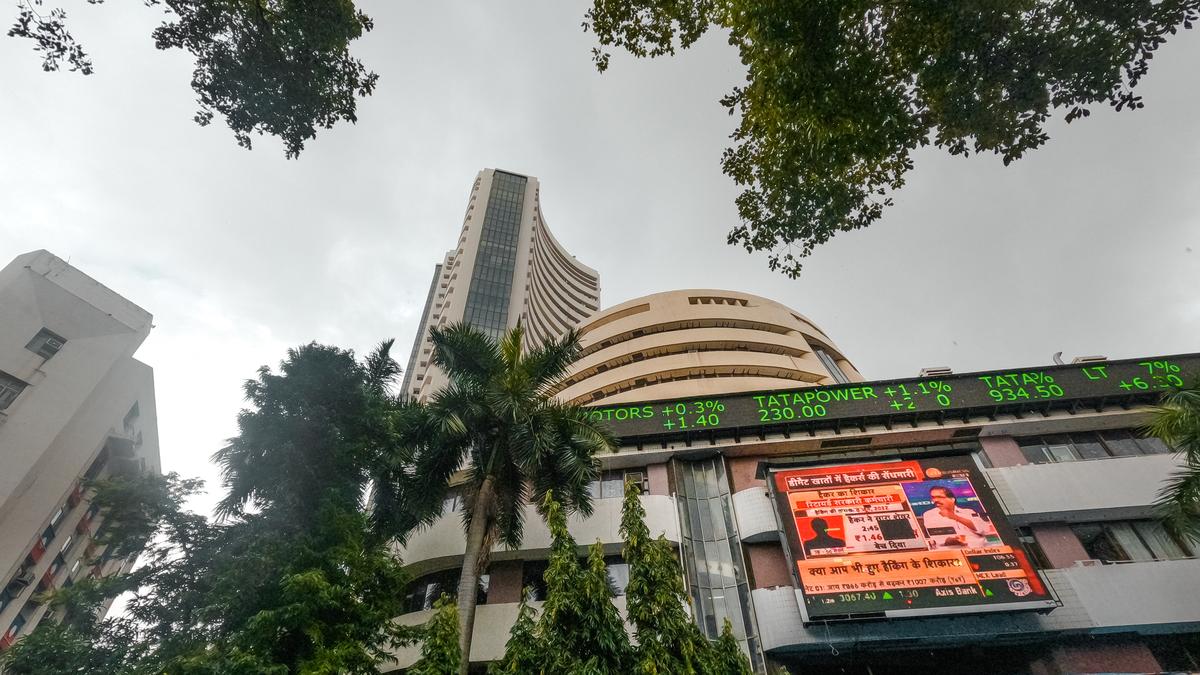
The Indian equity market slipped over the past four trading sessions, with the BSE benchmark losing 1,581.05 points — a fall of 1.84% — while the Nifty fell 451.7 points or 1.71%. The pullback comes amid renewed volatility that has left traders and investors reassessing risk and positioning for the coming weeks.
Market snapshot
- BSE benchmark: down 1,581.05 points (1.84%) over four days
- Nifty: down 451.7 points (1.71%) over the same period
- Overall tone: risk-off, with investors favoring caution over fresh buying
What may be driving the decline
Markets rarely move in a straight line. A short, sharp pullback like this can be driven by several factors that often interact:
- Global cues: Weakness in major overseas markets or concerns about global growth can trigger selling here.
- Macro data and monetary policy: Inflation, interest-rate expectations, or central bank commentary can change investor sentiment quickly.
- Foreign flows: Net outflows by foreign institutional investors can pressure domestic indices.
- Valuation checks and profit-taking: After periods of gains, investors may book profits and rebalance portfolios.
- Sector-specific news: Earnings misses, regulatory moves or commodity swings can hit particular sectors and weigh on indices.
Which investors feel the impact most
Short-term traders and leveraged positions tend to see the biggest swings during brief market downturns. Long-term investors may find the turbulence unsettling, but such moves can also create buying opportunities if fundamentals remain intact.
Retail investors
Those with concentrated bets or recent purchases at highs may be under pressure. A measured approach — avoiding panic selling and reviewing fundamentals — is usually prudent.
Institutional investors
Large funds may rebalance or hedge exposures, which can add to intraday volatility. Their actions often shape direction until fresh catalysts emerge.
Practical steps for investors right now
- Review, don’t react: Check why you bought a stock. If the reasons still hold, short-term noise may not warrant changes.
- Diversify: Avoid concentration in a single stock or sector. Diversification reduces idiosyncratic risk.
- Use staggered buying: If adding to a position, consider phased purchases rather than lump-sum buys.
- Preserve liquidity: Keep an emergency fund outside the market to avoid forced selling in a downturn.
- Maintain a long-term view: For investors with multi-year horizons, market corrections can be normal and even healthy.
Signals to watch next
Traders and investors should keep an eye on a few key items that could influence market direction from here:
- Upcoming macroeconomic releases (inflation, industrial production, GDP updates)
- Central bank commentary and policy decisions
- Global market moves and geopolitical developments
- Corporate earnings and guidance from major companies
- Foreign institutional investor flows and domestic liquidity trends
Bottom line
Short-term declines like the recent drop in the BSE and Nifty are part of market cycles. They can create uncertainty, but also opportunities for disciplined investors. The sensible response is to stay informed, reassess allocations against goals and risk tolerance, and avoid emotional decisions. Markets often correct first and recover later — knowing where you stand and having a plan helps navigate the volatility.