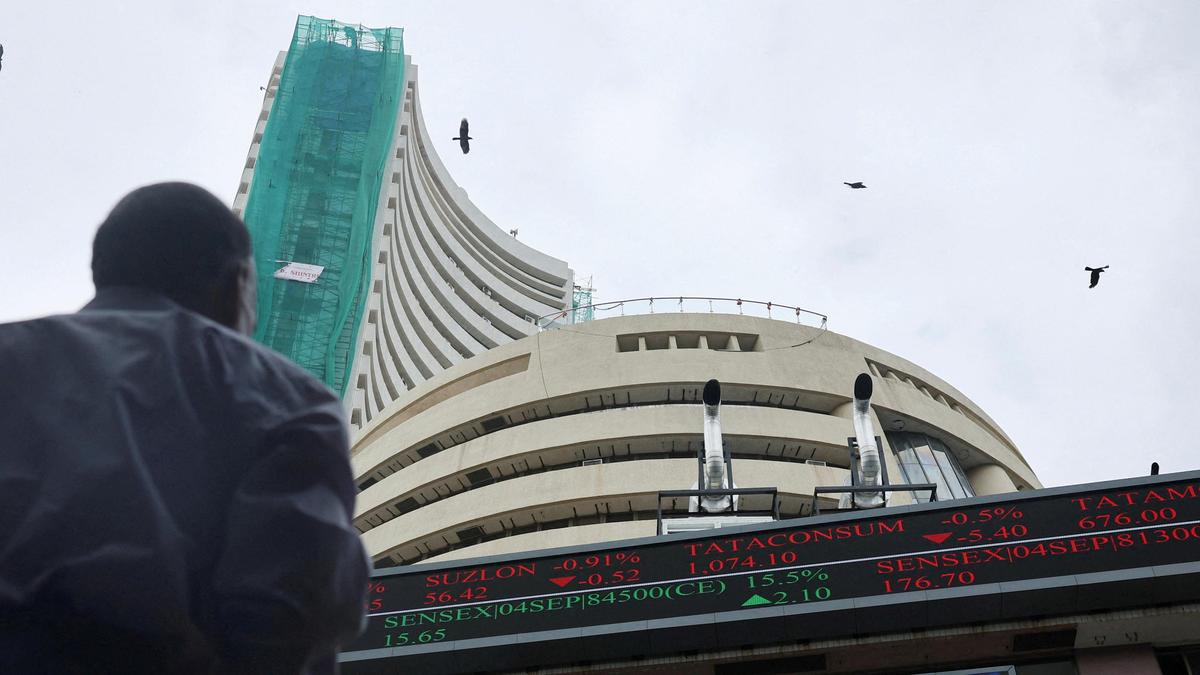
The Indian benchmark indices opened lower in early trade, with the 30-share BSE Sensex slipping and the 50-share NSE Nifty following suit. The moves come as investors balanced domestic corporate cues with global developments and short-term profit-taking.
Index
Show
Morning market snapshot
In early trade, the Sensex declined 320.69 points to 83,249.66. The Nifty was down 124.60 points at 25,573.40. The drop reflected a cautious tone among buyers after recent gains and some rotation across sectors.
What may be driving the fall
- Profit-booking: After recent rallies, some investors appear to be booking short-term gains, which can push headline indices lower in early hours.
- Global sentiment: Overseas markets and macro headlines often influence flows into Indian equities, and any risk-off cues abroad can weigh on domestic indexes.
- Sector rotation: Money moving out of high-fliers into defensives or into other asset classes can create pressure on the broader index.
Sectoral moves to watch
Early trade weakness is seldom uniform. Keep an eye on:
- Banking and financials: These often lead market direction, so underperformance here can meaningfully affect headline indices.
- IT and exports: Sensitive to currency and global demand, these names can react to international cues.
- Consumer and discretionary: Profit-taking in large-cap consumer stocks can also nudge the market lower.
How investors might respond
- Review positions: Short-term traders may tighten stops or reduce exposure; long-term investors can use dips to reassess allocation rather than react impulsively.
- Stay diversified: Spreading risk across sectors and asset classes helps manage volatility.
- Watch liquidity: Lower-volume sell-offs can exaggerate moves, so consider execution impact when buying or selling.
What to watch next
- Over the day: intraday momentum, sector leadership, and any corporate updates or policy announcements.
- Over the week: macro data releases, global central bank commentary, and foreign institutional investor (FII) flow trends.
- If markets continue to slide: monitor key support levels around recent lows and large-cap concentration that could dictate the extent of any downturn.
Early-session swings are a regular feature of equity markets. For most investors, the best approach is to stay informed, avoid knee-jerk reactions, and align actions with individual risk tolerance and investment goals.